
24/7 Emergency Oil Tank Replacement on Long Island
An oil tank leak isn't just a heating system problem, it's an environmental, insurance, and regulatory issue all at once. NYSDEC has specific reporting requirements when a residential oil tank leaks, your homeowner's insurance has specific exclusions and requirements, and your town may require permits for tank work. The replacement has to happen fast (containing the leak comes first), but it also has to happen correctly so you don't end up with a long-term cleanup obligation.
All Island Comfort handles all of it from one phone call: emergency containment of the active leak, NYSDEC reporting where required, removal of the failed tank (indoor basement, outdoor above-ground, or buried underground), installation of the new tank (Roth double-wall, Granby steel, fiberglass), and the paperwork your insurance company will request. Family-owned in Wading River since 2004.
If your tank is leaking right now, your tank inspection failed, your insurance company sent you a letter demanding tank replacement, or you suspect tank failure and want it confirmed, call us. We'll triage on the phone, dispatch a tank specialist, and have the situation under control.
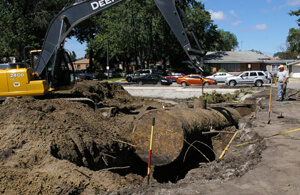
Tank Leaking? Call Now.
Stop the leak first, replace the tank fast. NYSDEC paperwork handled.
Call 631-591-2289Every Tank Type We Replace
Long Island oil tanks come in many shapes, locations, and ages. We work on all of them.
- Indoor basement tanks (Granby steel): 275-gallon and 330-gallon Granby/Houston tanks in the basement. The Long Island standard for the past 50 years.
- Indoor basement tanks (Roth double-wall): Modern double-wall steel-and-plastic tanks. Replaces single-wall Granby with secondary containment built in.
- Outdoor above-ground tanks: Tanks in the side yard or behind the house. Common on East End cottages and homes without basement space.
- Buried underground tanks (UST): Older steel tanks buried in the yard. Increasingly being removed because of corrosion risk and insurance requirements.
- Twin-tank systems: Two 275-gallon tanks plumbed together for higher fuel storage capacity. Common on larger homes and East End estates.
- 550-gallon and larger tanks: Larger tanks for high-consumption homes.
- Fiberglass tanks: Corrosion-resistant fiberglass tanks for buried and outdoor applications.
- Tank gauges & vent alarms: Tank-level gauges (mechanical and digital) and overfill prevention vent alarms (whistle alarms required by code).
- Tank piping & oil safety valves (OSV): Copper feed lines, oil safety valves, fuel filters, and tank fittings.
- Containment basins & secondary containment: Required under newer indoor tanks and around outdoor tanks. We install containment basins on every emergency replacement.
When Tank Replacement Is Needed
Some tank replacements are urgent, others can be planned. Here are the situations that drive emergency replacement.
Active Leak from the Tank
Visible drip, oil pooling under the tank, oil smell that won't dissipate, or oil sheen on basement floor. Containment first, replacement next, NYSDEC reporting if the leak is over a regulated threshold.
Tank Failed Inspection
Insurance company tank inspection or oil dealer inspection identified corrosion, weeping, pinhole leaks, or end-of-life condition. Replacement is required to maintain insurance and oil service.
Tank Older Than 25-30 Years
Single-wall steel indoor tanks have a 25-30 year typical lifespan. After that, internal corrosion (water condensation pooling at the bottom) creates pinhole risk. Insurance companies are increasingly demanding replacement at this age.
Visible Corrosion or Weeping
Brown rust streaks running down the tank, weeping spots on the bottom or sides, or excessive sweating that's actually wet rust. All warning signs.
Buried Underground Tank Removal Required
Insurance, real-estate, or environmental driver to remove a buried tank. Required when selling many Long Island homes built before 1980. Specialty equipment and NYSDEC paperwork.
Tank Failed Pressure Test or Tightness Test
Some inspections include a pressure or tightness test. A failed test means the tank is leaking or about to.
Switching from Oil to Gas (Tank Removal Only)
When converting from oil to gas, the existing oil tank typically needs to be removed (indoor) or properly abandoned (buried). Required by some towns and most insurance policies.
Insurance Company Letter Demanding Tank Action
Insurance carriers are increasingly issuing letters requiring tank inspection, replacement, or removal as a condition of continued coverage. We handle the paperwork loop.
NYSDEC Reporting Required?
Spills above the regulated threshold (usually any visible release of #2 fuel oil) must be reported to NYSDEC. We handle the reporting paperwork.
Call 631-591-2289Our 4-Step Rapid Response for Emergency Oil Tank Replacement
- 1Triage on the call. A real Long Island dispatcher answers and walks through your symptoms. We rule out anything you can fix in 60 seconds (thermostat, breaker, reset button), then dispatch immediately. No phone tree, no offshore call center.
- 2Local tech to your door. Typical response is 1 to 3 hours across Suffolk and Nassau, faster for the North Shore corridor between Wading River and Port Jefferson. Your tech texts when 15 minutes out.
- 3Diagnose and quote before any wrench moves. Flat diagnostic fee, written quote on-site, your written approval before any repair starts. No surprise charges, no upselling.
- 4Containment first, replacement same-day or next-day. Step 1 is always containment of the active leak (absorbent material, drip pan, plugging the leak source). Step 2 is removal of the failed tank. Step 3 is installation of the new tank. Most indoor basement-tank emergency replacements complete in one day. Buried tank removals typically take 1-3 days depending on excavation requirements.
What to Do While You Wait for the Technician
- If you see active oil leaking, place an absorbent material (kitty litter, oil-absorbent pads) under the leak and a containment pan if possible. Don't use water to wash the oil away.
- Shut off the oil supply to the burner if you can locate the oil safety valve at the tank or near the burner. This stops the burner from drawing more oil.
- Ventilate the area to clear oil vapors. Open basement windows if safe.
- Avoid open flames near the tank. Oil vapors are not as flammable as gas but still ignite under the right conditions.
- Don't try to patch the tank with epoxy or temporary sealants. Tank shells can't be safely patched.
- Document the leak with photos for insurance purposes. Date and time stamp.
- Notify your insurance carrier as soon as you've contained the leak. Most policies require prompt notification for coverage.
Why Long Island Trusts Us With Emergency Tank Replacements
- 22+ years on Long Island. Family-owned in Wading River since 2004. We know the housing stock and the equipment families.
- A real person answers, day or night. 24/7/365 dispatch from a local Long Island number, not an answering service.
- Heavily stocked trucks. Most calls finish on the first visit because the parts that fail most often live on every truck.
- Cross-trained on every fuel and system. Gas, oil, electric, propane, heat pump, hydronic, steam, radiant. One company, no subcontracting.
- Licensed for everything we do. HVAC, plumbing, oil-burner, gas-fitting, EPA Section 608 refrigerant. Insurance certificates on request.
- Flat, transparent pricing. Diagnostic fee disclosed on the phone. Repair quote in writing before work starts. After-hours premium disclosed up front.
- Service plan members skip the line. Annual maintenance plan members get first dispatch priority and reduced after-hours rates.
Long Island Service Area for Emergency Oil Tank Replacement
We replace oil tanks across all of Suffolk and Nassau counties from our Wading River base. NYSDEC-compliant work for indoor, outdoor, and buried tanks.
Suffolk County
- Wading River
- Riverhead
- Mount Sinai
- Rocky Point
- Shoreham
- Miller Place
- Port Jefferson
- Setauket
- Stony Brook
- Smithtown
- Huntington
- Northport
- Centereach
- Patchogue
- Sayville
- Manorville
- Calverton
- Mattituck
- Cutchogue
- Greenport
- Westhampton
- Hampton Bays
- Southampton
- East Hampton
Nassau County
- Hempstead
- Oyster Bay
- Long Beach
- Garden City
- Hicksville
- Levittown
- Massapequa
- Mineola
- Freeport
- Westbury
- Plainview
- Syosset
- Bethpage
- Farmingdale
- Manhasset
- Great Neck
- Port Washington
- Roslyn
- Glen Cove
- Rockville Centre
- Valley Stream
- Lynbrook
- Wantagh
- Bellmore
Related Emergency Services
If your oil furnace or boiler has its own emergency, jump to that page. If you're considering switching off oil entirely (oil-to-gas conversion or oil-to-heat-pump), see the standard service pages.
-
Emergency Oil Boiler Repair
Oil boiler lockout, no-heat, smoke. Reset, nozzle, electrode, and pump on the truck.
Available 24/7 -
Emergency Oil Furnace Repair
Oil furnace lockout, smoke, soot, no-fire. Oil-burner specialists with parts on the truck.
Available 24/7 -
Emergency Heating Repair
Heat is out, equipment silent or not warming. Any heating system, gas, oil, electric, or hydronic.
Available 24/7 -
Emergency Water Heater Replacement
Tank failed catastrophically. Same-day water heater replacement so the house has hot water tonight.
Available 24/7
Related Standard Services
If it's not an after-hours emergency, our standard service pages cover routine repair, replacement, and tune-ups at non-emergency rates.